
Project visuals
Interface screenshots, reconstructed deliverable extracts and workflow illustrations are labelled. All visuals use fictional content and metadata, with client branding removed. Select an image to view it full size.
The engagement
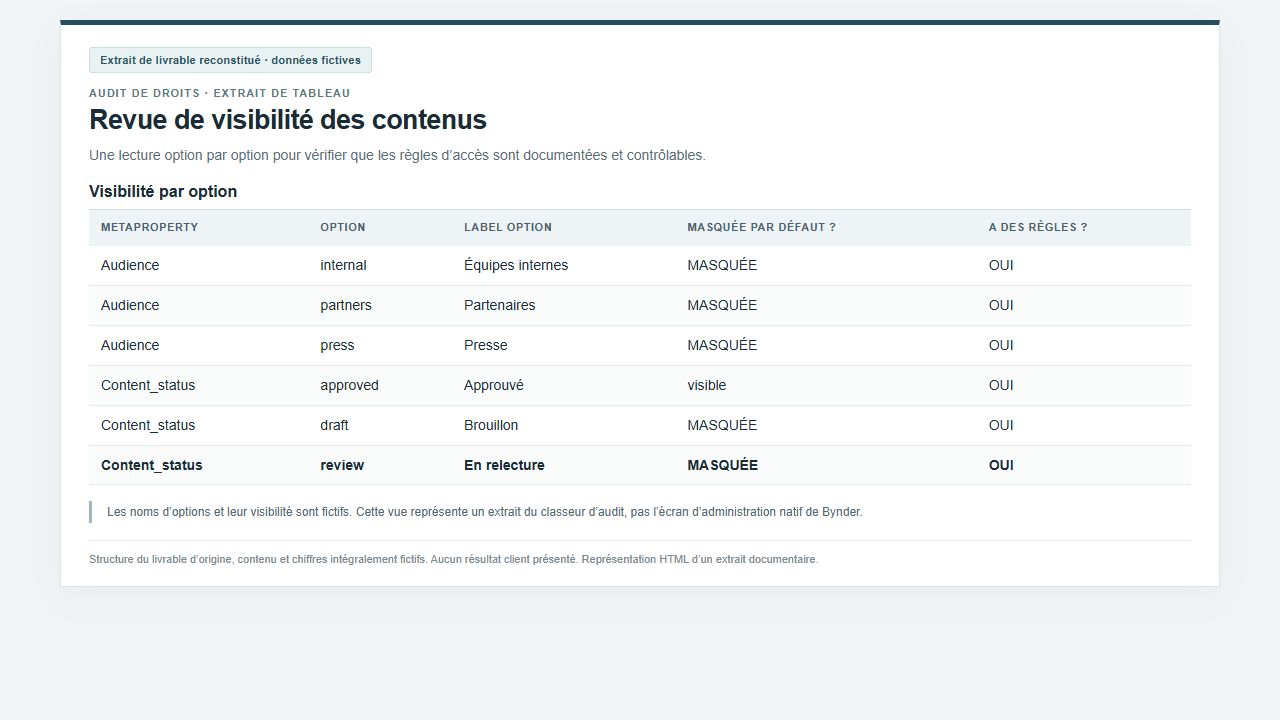
Before launch, a perfume house's Bynder DAM had no content segmentation at all: the API audit showed no content access rule set on any metaproperty. Every user could therefore see all published content regardless of audience: distributors, agencies, internal teams. In parallel, the channel metadata was unusable: a significant share of the active library carried every value at once, which amounted to carrying none.
We rebuilt the rights matrix from the actual audiences, then set the corresponding content access rules, metaproperty by metaproperty and option by option. The channel clean-up was handled separately: a full scan of the active library, reindexing rules costed asset by asset, and an exhaustive list of assets with no usable value, each with a direct link.
Segmentation is in place and auditable: each audience sees only what concerns it. Remaining judgement calls were handed back as decision workbooks with drop-down menus, so the teams can settle them without coming back to us.
Takeaway
A takeaway for your project
We implemented audience-based access segmentation and handed the remaining metadata decisions to the teams.
Technologies
- Bynder
- API REST
- Python
Your next step
Who should see which content in your DAM?
Describe your audiences, channels and access issues. We can review the effective rules and scope adjustments for your teams to validate.
Discuss your project